
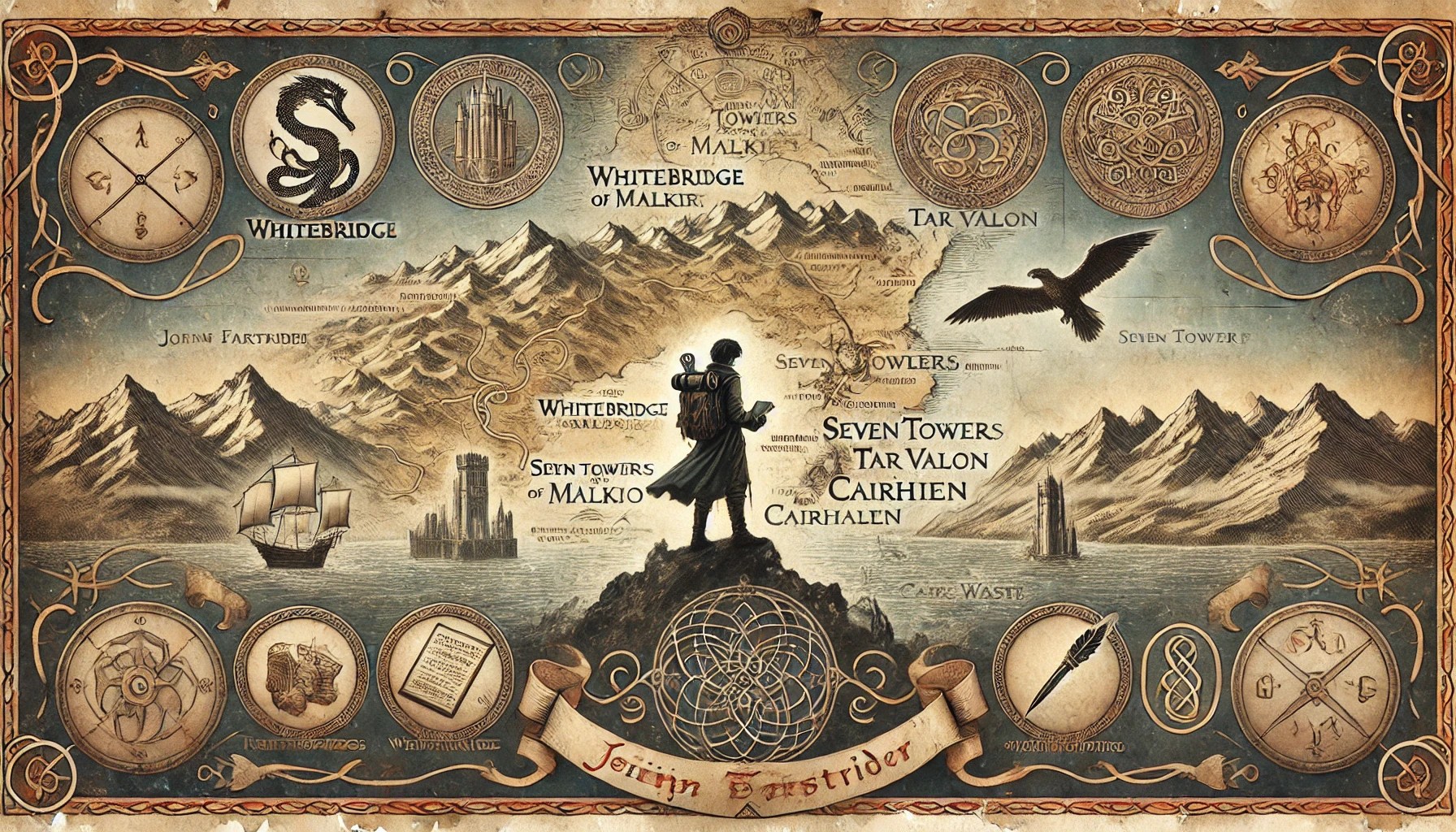
Author’s note on corrections for this draft:
This draft addresses and corrects some timeline issues in alignment with canonical information. Canonically, Jain Farstrider was born in Malkier in 925 NE, though there appears to be little in-universe detail about his youth or family, though my research continues. What is known is that Jain played a critical role in 953 NE, bringing Cowan Gamellan to justice after a coup attempt to overthrow Al’Akir Mandragoran, ruler of Malkier.
In this story, Jain begins unaware of his Malkieri heritage during his youth, growing up far from the court and the intrigue of his homeland. His journey will eventually take him back to Malkier, where he will uncover his true lineage and step into his role in the pivotal events leading to Cowan’s capture. These adventures occur against the backdrop of political turmoil and betrayal, which directly set the stage for the devastating fall of Malkier to the Trollocs and the Shadow.
The story does not end there. Following the fall of Malkier, Jain embarks on many of the famous adventures that solidify his legendary status. It is during this time, between the destruction of his homeland and the end of the Aiel War, that Jain’s name becomes known throughout the Westlands. His journeys during this turbulent period are as much about self-discovery as they are about exploration, forging alliances, and recording the world’s wonders and dangers.
This exploration of Jain’s earlier years and legendary travels aims to weave his personal growth with the grand historical events of The Wheel of Time, balancing his iconic status with the human story behind the hero.
Prologue: A World to Discover
Written in the spring of 940 NE, in the village I was raised in.
I have long been struck by the vastness of the world. Each season brings its share of tales; travelers at market speak of cities I have never seen, mountains that pierce the sky, rivers so wide you cannot see the far bank. My neighbors nod politely, sometimes with interest, sometimes skepticism, but rarely with more than idle curiosity. Yet to me, these stories have always been like sparks to dry kindling. How could anyone live their whole life content to tread the same soil, year after year, when there is so much out there to learn, to see, to understand?
Perhaps it is my father’s influence that left me this way. Before he settled in our village, he served as a scribe in a court far removed from our quiet fields. He rarely spoke of those days, and when he did, it was with a note of finality that invited no questions. But his stories lingered, casting my small corner of the world in shadow compared to the splendor he hinted at. His words painted vivid pictures of marble-floored halls, sprawling libraries, and the hum of life in places larger than I could comprehend.
When I was old enough to hold a pen, he began to teach me the shapes of letters and the steady hand needed to write them. “A steady hand comes with a steady mind,” he would say, guiding my fingers over the page. “And a steady mind can weather any storm.” books were a rarity but whenever a peddler came through with one my father made sure to barter for it, I read many fascinating stories and historical tomes during my childhood. Someday, I hope to see an actual library. Imagine the wealth of knowledge within just waiting to be poured over! My thirst for knowledge became unquenchable. The written word being one of human kind’s most important achievements!
Thus, the greatest gift father gave me was a journal on my seventh nameday; an empty book, bound in worn leather, its edges soft with age. “This is yours,” he said, placing it in my hands with the weight of ceremony. “Fill it with what matters.” I was too young then to grasp the significance of his words, but I understood that the journal was precious.
When he died five years later, felled by a tragic accident with the plow, the journal became more than just a gift. It was a link to him, a reminder of his voice, his steady hand, and his belief in the power of words. My mother had passed even earlier, succumbing to illness when I was just three, leaving naught but vague memories, and a deep sadness in my father’s often distant gaze. The journal now is my most prized possession. Both an anchor to the past and a spark for the future.
It has always whispered of a larger world, a world my father may have glimpsed and that I now yearn to see for myself. At some point on my trek, I will find where my father was born and return there to learn what I can, for now, I will set out with only the road and my feet to guide me as I learn more of this wonderous world that awaits, and so, this journal is, I suppose, a selfish act. I cannot yet know if the stories I gather will matter to anyone but myself. Perhaps these pages will be a comfort to me one day, when my legs can no longer carry me to the horizon. For now, they are an attempt to preserve what I see, hear, and feel. The world is far too large for one man to understand, but perhaps I can record my small part in it.
I do not know what lies ahead. I have coin enough to keep my belly full for a time, a sturdy pair of boots, and the will to walk wherever the road leads me. If I am lucky, I will find people with stories to share, food to teach me the flavor of their lives, and places that make the heart stop with wonder.
The village elders say the wider world is dangerous, full of bandits, trollocs, and worse. But I have spent fifteen years in this village and never seen anything more threatening than a summer storm. If such dangers wait for me, they will be no worse than the suffocation of never knowing what lies beyond the next rise.
I begin my journey now, with nothing to guide me but curiosity, my father’s journal, and a growing conviction that the world is far too beautiful and strange to remain unexplored.
— Jain Charin
Chapter One: The First Step
(My age: 15)
Journal Entry: The Beginning
Written in the evening, after my first day on the road.
It is evening now, on the first day since I left home, though the road already feels like it stretches endlessly ahead of me. The fields of golden wheat and the small clusters of oaks I passed so many times now seem different, more vivid, as if the act of leaving has given them new life.
The village was awake and bustling as I made my way out early this morning, the suns rays just peaking out through the morning mists, though most of the bustle today seemed directed at me. A small crowd had gathered by the edge of the road; farmers leaning on their hoes, Chert, the blacksmith with his leather apron still smeared with soot, and a few children who waved with more excitement than I could muster myself. It was nor surprise to anyone I was leaving today, I had talked and dreamed of it to everyone in town for long enough beforehand.
“Finally off to see the wide world, eh, Jain?” old Bren called from where he stood by his cart. He had a grin as wide as the millpond. “He’ll be back before the sun sets on the second day,” he added, loud enough for all to hear.
“Don’t let the wolves eat you!” shouted one of the boys, grinning with mischief.
“Or worse, the Aes Sedai!” cackled the smith, though his tone was more laughter than warning as everyone knows that Aes Sedai, like Trollocs, are things of bedtime stories and tall tales.
The teasing was constant, but their smiles were warm. They had always treated me like one of their own, ever since I became what they called “the village boy.” After my parents were gone, it was the village that raised me; a patchwork of helping hands and stern voices. I was fed by one family, clothed by another, scolded and taught, and indeed loved by all, and while I was and remain grateful, once my family passed it never truly felt like home. No, my home was out there, somewhere. On the road.
“I packed you something for the road,” said Mistress Daera, one of the motherly marms who had always looked after me. She pressed a small bundle into my hands, wrapped neatly in a square of cloth. “Bread and cheese,” she said briskly, as if daring me to refuse. “It won’t keep you forever, but it’ll get you through a day or two.”
I tucked the parcel into my pack, feeling a lump rise in my throat. It wasn’t the first time the village had shown me kindness, but it felt different today, final, in a way I couldn’t quite explain.
“Stay out of trouble, lad,” Bren called again as I passed the last cottage.
“And don’t forget where you came from!” added Chert; blacksmith’s hammer leaned idly across his shoulder.
I waved as I crested the hill, their voices fading behind me, their laughter carried on the breeze. I didn’t look back.
The road stretched ahead of me, a winding ribbon cutting through the endless expanse of the Caralain Grass. The rolling fields were alive with color! Green blades swaying in the breeze, wildflowers dotting the landscape with bursts of yellow, purple, and white. The air smelled clean and fresh, carrying the faint sweetness of blooming clover and the earthy richness of freshly tilled soil.
Above, the sky was a canvas of brilliant blue, so vast it felt like it could swallow me whole. The sun hung high, warming my back as I walked. In the distance, the Mountains of Mist stood like hazy sentinels, their jagged peaks softened by the shimmering air. They seemed impossibly far away, yet I couldn’t help but wonder what lay beyond them.
The world around me buzzed with life. Birds flitted between the tall grasses, their songs rising and falling in a cheerful chorus. A hare darted across the path ahead, its long ears twitching before it disappeared into the underbrush. At the edge of a distant copse, I caught sight of a pair of deer, their sleek forms moving with a grace that made my own footsteps feel clumsy. They paused, ears flicking toward me, then bounded away, their white tails flashing like tiny beacons.
I couldn’t stop smiling. For the first time in my life, the future felt boundless, full of possibilities I hadn’t dared to dream of before. Each step took me farther from the familiarity of home, but it also brought me closer to something new; something extraordinary.
I met no one until midday when I crossed paths with an old shepherd driving a flock of scruffy sheep. His staff tapped the ground in a steady rhythm, and the sheep moved as one, a woolly tide around me. “Don’t let the wolves get you,” he called over his shoulder with a gap-toothed grin, echoing what one of the village boys had shouted that morning. Was he joking? I’m was not entirely sure, but now was worried about wolves.
I stopped by a stream just past noon, where the water ran fast and clear. The rocks at its bottom gleamed like polished glass, and dragonflies buzzed in the reeds. I lingered there longer than I should have, soaking my feet and unwrapping the bundle Mistress Daera had given me. The bread was still warm, the cheese sharp and satisfying.
A bird with bright yellow feathers perched on a branch nearby, watching me as if I were the curiosity and not it.
The world was vast, and I had barely begun to explore it.

Margin Note: I wish I’d thought to sketch the bird. Its wings shimmered like sunlight on water.
Margin Note: No wolves that day or night.
Journal Entry: Whitebridge
Written over two evenings during my first visit to the town.
Whitebridge! The stories of my childhood could not do it justice. It has been some two weeks since I left home, and my trek across the Westlands of Andor has already brought wonders I never imagined. After setting out, I made my way west toward the Mountains of Mist, where I stumbled upon a relatively small but notable river. I later learned it was called the River Haevin. Following its southerly flow along the east bank, I eventually reached its confluence with a much larger and more impressive river; the Arinelle.
From there, I continued along the Arinelle’s mighty banks until I arrived at the magnificent town of Whitebridge. Though it is called a large town, to my farmer’s eyes, it appeared as grand as any city I could imagine. The buildings were taller, the streets busier, and the air seemed charged with the energy of so many people in one place. If Whitebridge is considered small compared to cities like Caemlyn, I can scarcely fathom how much more awe-inspiring those places must be. I am eager to see for myself.
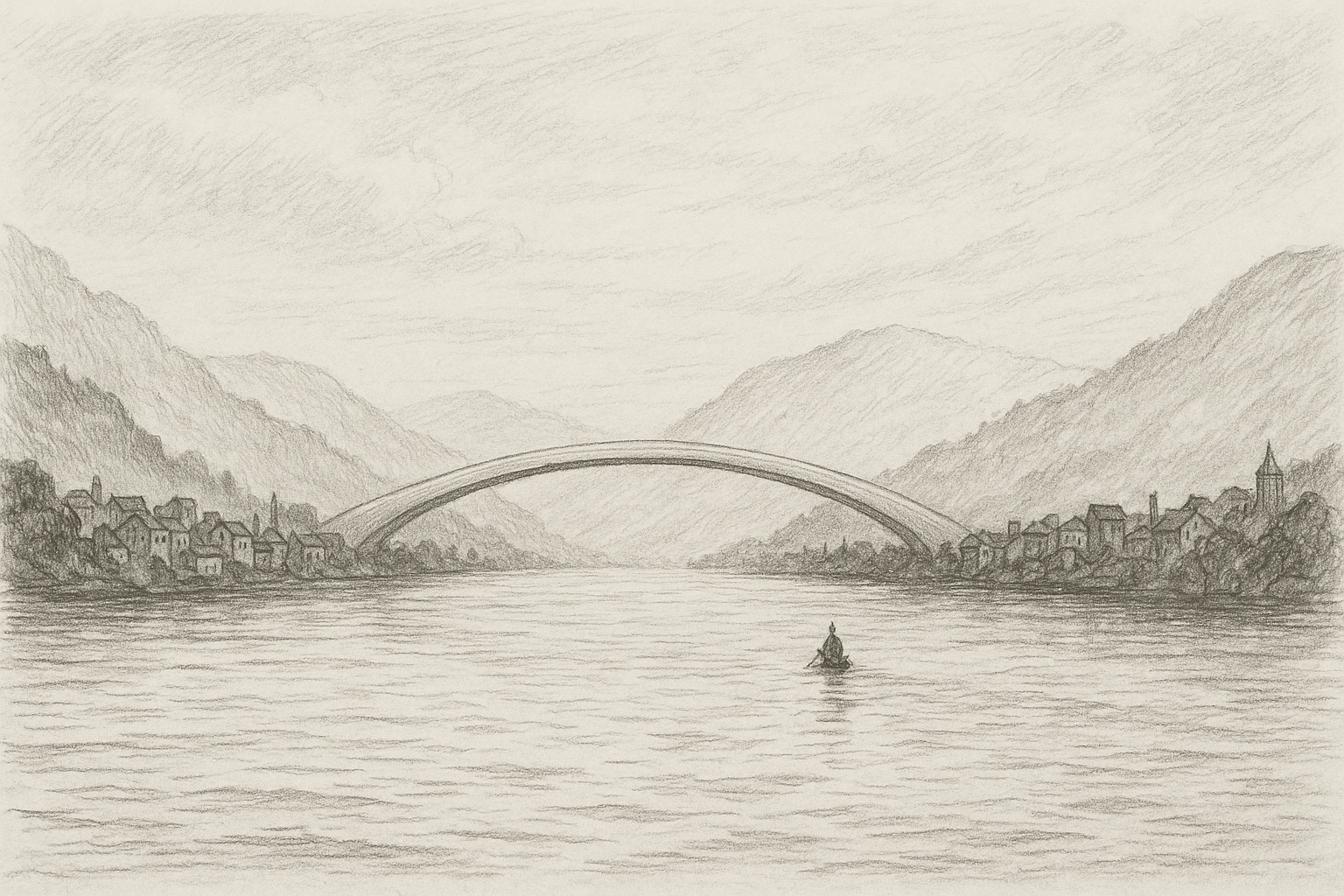
The bridge for which the town is named is nothing short of extraordinary. It spans the Arinelle like something from legend, its arch gleaming white as if made of starlight. Up close, the surface is impossibly smooth; no seam or joint that I could find, though I ran my hand along its base. A guardsman stationed at one end of the bridge told me it was unbreakable, that no blade or fire could ever mar it. I laughed at the idea, but he swore it was true.
The town itself sits snugly along the riverbank, its streets bustling with merchants and travelers. I wandered through the market square, where peddlers shouted over each other to sell everything from bolts of cloth to jars of honey. I bought a meat pie from a cheerful woman with flour on her hands and a sharp eye for coins. It was flaky and delicious, though it burned my tongue.
I found an inn, The Gleaming Bridge, where I shared a table with an older peddler whose pack bulged with odds and ends. He spoke eagerly about the bridge, claiming it was made not by Aes Sedai but by a long-lost kingdom called Manetheren. “They say its people were so brave that Trollocs feared to enter their lands,” he said, leaning close as if sharing a secret. “And the bridge is their last gift to the world.”
I couldn’t help but laugh when he brought up Trollocs. “Trollocs,” I said, “like the ones that hide under children’s beds and eat naughty boys?”
He sniffed and took a long sip of his ale. “Laugh all you like, lad. You wouldn’t laugh if you saw one. Great hairy beasts, with tusks and claws and beaks. The Borderlanders see them all the time, or so they say.”
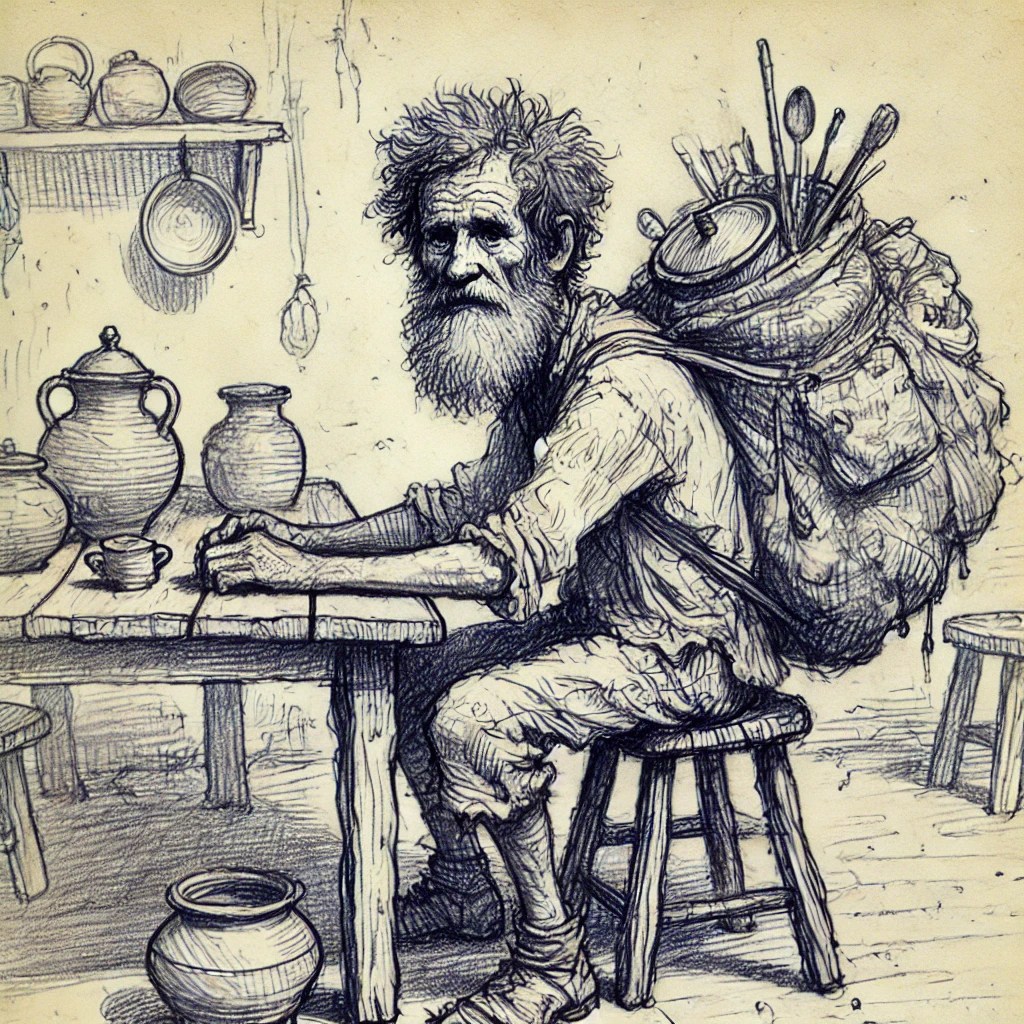
The conversation drifted as a young man with a lute stepped onto a small platform near the hearth. His tune wove through the low hum of conversation, the firelight dancing across the strings as he plucked them.
“The wheel turns round, the rivers run,
And time forgets what men have done.
But heroes rise, their names endure,
Their tales are sung in halls secure.
Oh, ride the wind, oh, sail the tide,
Through shadows dark, with light as guide.
For all who seek, the world is wide,
And fortune waits for none.”
The words struck me, though I couldn’t say why. They seemed meant for me, a reminder that the world beyond my village was vast and waiting. I finished my stew and found myself humming the tune as I retired for the night.
Reflection:
Whitebridge taught me two things: the world is larger than I ever imagined, and its people are even stranger. As I write this, the bridge is a faint silhouette behind me, the road winding ahead toward new wonders. I wonder if I’ll find more tales of Trollocs along the way, or if this was just the whim of an old man with too many miles under his belt.
Journal Entry: Four Kings
Written at a small campsite outside the town.
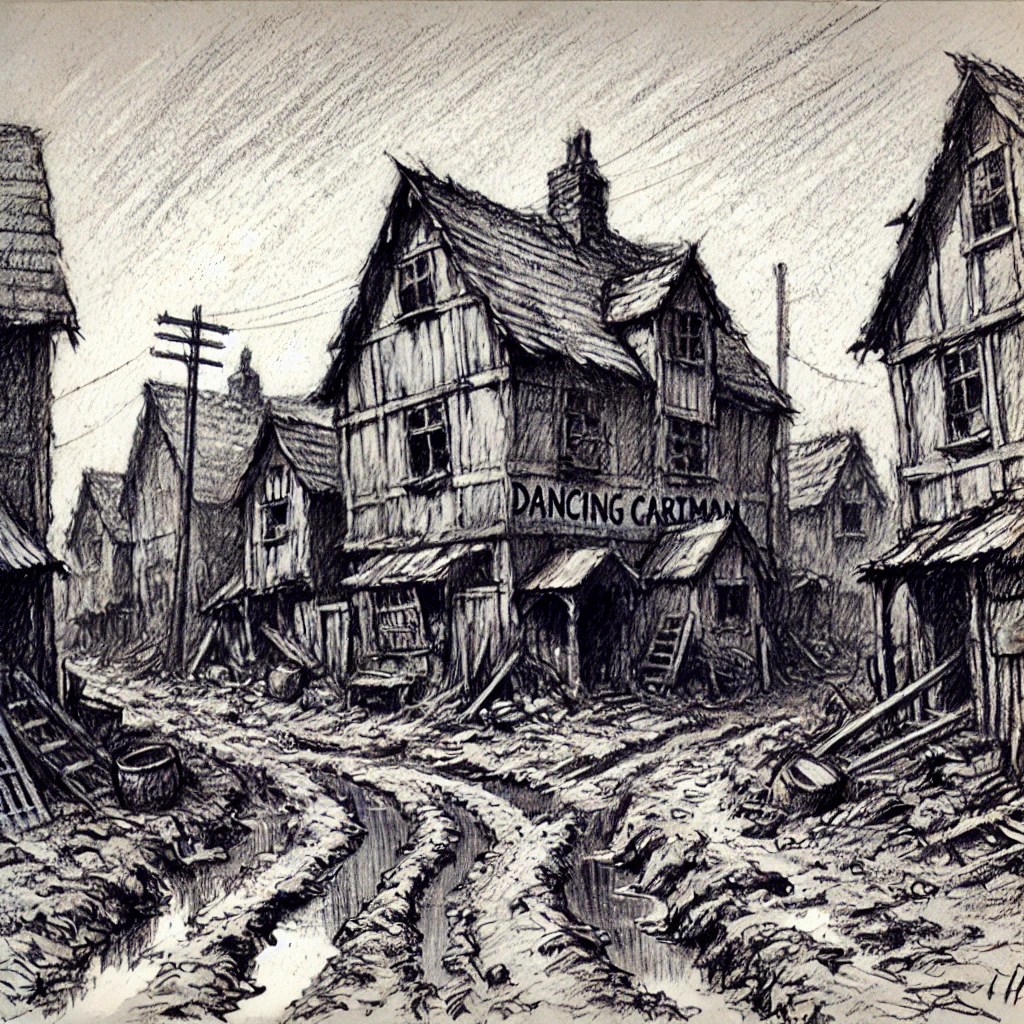
Four Kings was not what I expected. I had heard the name spoken in Whitebridge as though it were an important place, but what I found was little more than a muddy stretch of road surrounded by squat buildings that seemed to lean inward, as if ashamed of themselves.
The heart of the town was an inn called The Dancing Cartman, a hulking structure that looked ready to collapse under the weight of its own roof. Inside, the common room was dim and crowded, the air thick with smoke and the clatter of dice. Men shouted over one another, and a harried serving girl darted between the tables, her tray piled high with mugs of ale.
The innkeeper was a greasy man with small, suspicious eyes who seemed reluctant to rent me a room. He eyed my pack as though wondering what he could charge me for, finally settling on an outrageous price for a thin stew that tasted of salt and little else.
I overheard merchants arguing about bandits on the road to Caemlyn. One man claimed the bandits were deserters from a lord’s army, though he wouldn’t say which one. “The roads aren’t safe anymore,” he growled.
I left Four Kings the next morning with a lighter purse and a strong desire to never return. The town felt like a trap, its people wary and quick to anger. Even the children seemed too serious, their eyes darting as if they expected to be cheated at any moment.
Journal Entry: Caemlyn and the Braem Wood
Written over several nights in and around Caemlyn.
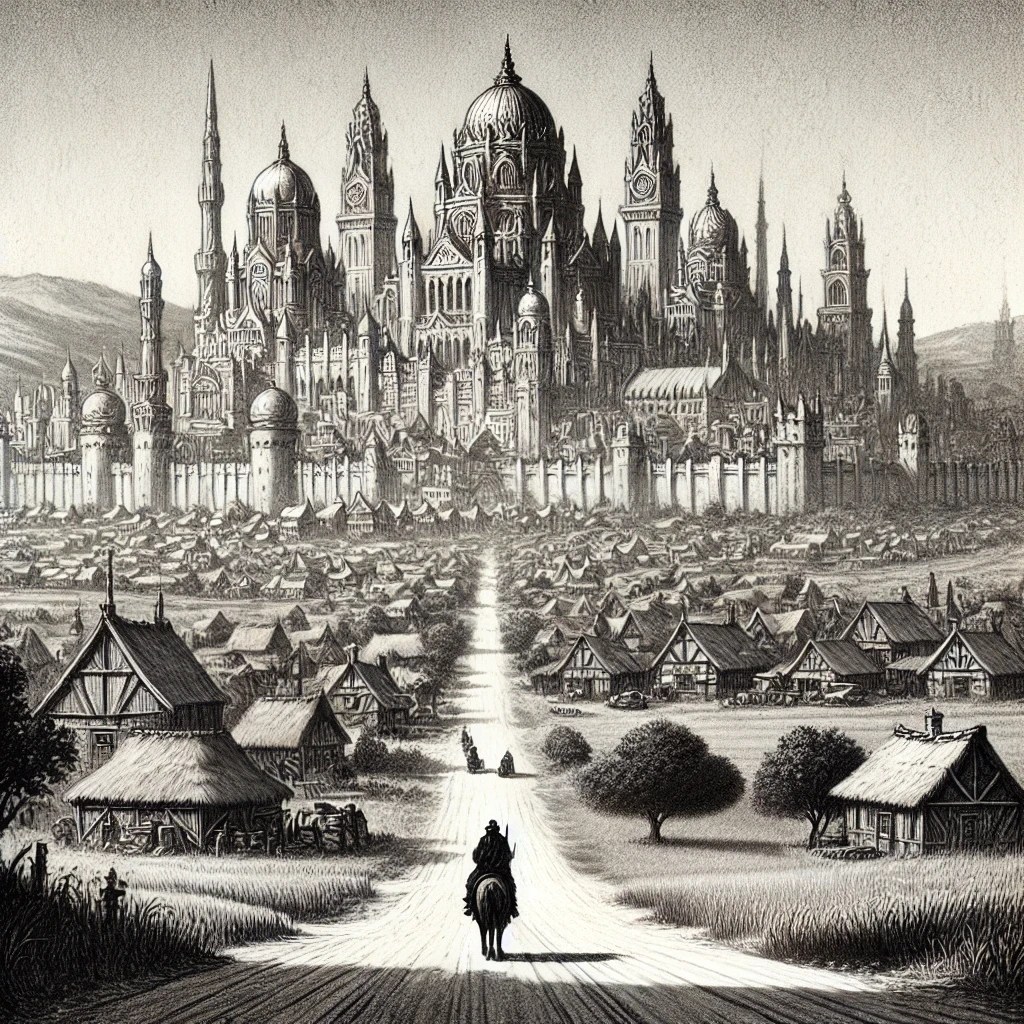
Caemlyn! If Whitebridge was a marvel, then Caemlyn is a wonder beyond all imagining. I first saw its white walls rising on the horizon as I followed the well-trodden road eastward. The city seemed to grow from the hills themselves, gleaming in the sunlight like a crown. My heart raced as I approached, and with each step, the sight became more magnificent.
The road leading to the gates was alive with motion. A steady throng of merchants, farmers, travelers, and even nobles, all heading toward the city. Wagons creaked under the weight of goods, laden with barrels, crates, and sacks of grain. Brightly painted carts with jingling bells carried peddlers and their wares. Hawkers called out their goods, their voices blending into a symphony of commerce. Children ran alongside the wagons, laughing and chasing one another, their joy infectious even to a lone traveler like me.
As I drew closer, the scent of the city reached me. It was an intoxicating mixture of freshly baked bread, leather, spices, and the faint tang of horses and sweat. The noise grew louder: the chatter of merchants haggling, the clatter of hooves on cobblestone, the occasional bark of a dog.
The gates to the Outer City stood wide open, flanked by towers that seemed impossibly tall. Guards in red and white tabards bearing the Lion of Andor stood at attention, their halberds gleaming in the afternoon light. Their discipline was impressive; they eyed each traveler carefully but efficiently, their presence a quiet reminder of the Queen’s authority.
When my turn came, I stepped forward hesitantly, unsure of the protocol. One of the guards, a broad-shouldered man with a neatly trimmed beard, looked me over.
“Your name and business in Caemlyn?” he asked, his tone brisk but not unkind.
“Jain,” I replied. “Just a traveler, here to see the city.”
His brow lifted slightly, as though my answer amused him. “See the city, eh? Well, keep to the roads and out of trouble. The Inner City’s no place for wandering boys.”
I nodded quickly, clutching my pack, and passed through the gates into the Outer City.
The Outer City was a maze of winding streets and bustling markets, its buildings a jumble of timber and stone, with colorful awnings stretching over shopfronts. Vendors shouted their wares, offering everything from bolts of silk to roasted nuts. Street performers juggled or played lively tunes, their hats set out for coins. It was chaotic and alive, the air thick with the scents of spices, roasted meats, and the occasional waft of perfume.
But it was not until I climbed the hill to the gates of the Inner City that I truly understood why Caemlyn was called the jewel of Andor.
The Inner City was a world apart. Its white stone walls encircled a place of beauty so profound it seemed almost unreal. As I passed through the gates, my breath caught in my throat. The streets were wide and paved with pale stones that shone in the sunlight. Fountains sparkled at intersections, their water catching the light and casting rainbows into the air. Gardens bloomed with roses of every imaginable color, their fragrance drifting on the breeze.
The buildings here were elegant, their architecture graceful and balanced, with arched windows and carved facades. Even the smallest shops had an air of refinement, their signs painted with care, their wares displayed like treasures. I learned that the inner city had originally been crafted by amythical race of beings called Ogier. What is an Ogier? Are they still alive? What mysterious forces or mystical powers led them to be able to craft such marvelous and beautiful structures?
Guards patrolled these streets as well, their bearing proud and watchful. Their tabards, emblazoned with the Lion of Andor, seemed brighter here, their steps echoing on the smooth stone streets.
I wandered for hours, unable to take it all in. At every turn, there was something new to marvel at; a gilded fountain sparkling in the sunlight, a statue of some long-dead queen carved with intricate detail, or a glimpse of the royal palace itself in the distance, its gleaming spires piercing the sky like a vision from a dream.
Caemlyn is not merely a city; it is a masterpiece, a living testament to the power and beauty of Andor. Words feel inadequate to describe its grandeur, and yet I am compelled to try.
That evening, at an inn in the New City, I overheard a farmer speaking about strange happenings in the Braem Wood: cattle vanishing without a trace, ruins half-buried and forgotten, and the shadow of a spirit said to guard them. His words struck a chord deep within me. Curiosity burned bright, and the next morning, I set out to see the truth for myself.
The Braem Wood was dense and quiet, its air thick with the scent of earth and greenery. The paths were little more than overgrown trails, winding through towering oaks and thorny underbrush that snagged at my cloak. By midday, I found the ruins the farmer had spoken of; ancient stones jagged and weathered by the passing of centuries, half-hidden beneath creeping ivy and moss. Their silent grandeur was captivating, and I began searching for the best vantage point to sketch them.
That’s when I saw them.
A group of rough, armed men stood on the path ahead, their voices raised in argument that teetered on the edge of violence. Scattered on the ground between them were what I first thought to be plundered goods. But as I crept closer, the shape of the “spoils” became horrifyingly clear. My stomach churned. It wasn’t mere goods they were fighting over.
Bandits.
I barely managed to dive behind a fallen log, holding my breath as their shouting grew louder. My heart pounded in my chest, a wild rhythm of panic and fear. Before I could slip away unnoticed, a sharp, commanding voice cut through the din.
“Drop your weapons!”
From the opposite side of the clearing, another group emerged. These were no common travelers; their movements were deliberate, their weapons ready. At their head was a woman clad in a leather jerkin, a long knife hanging at her belt. Her sharp eyes scanned the scene like a hawk’s, taking in every detail with unnerving precision. It was clear she had no intention of negotiating.
The next few moments were chaos. Arrows hissed through the air, men shouted, and the clash of steel filled the clearing. I ducked behind a crumbling wall, my heart hammering as I tried to make sense of the unfolding battle. It became clear that the woman and her group were no strangers to combat; they were hunting the bandits and knew exactly how to handle them.
When the fight ended, the woman wiped blood from her blade on the shirt of a fallen bandit. Her gaze fell on me as I cautiously stepped out from behind the wall. Bemusement flickered across her face.
“What are you doing here, boy?” she asked, her tone curious rather than angry.
I stammered something about exploring the ruins, half-expecting her to reprimand me. Instead, she laughed; a sharp, honest sound that surprised me.
“You’ve got guts, I’ll give you that,” she said, shaking her head. “But you seem to be lacking in brains. You’re lucky we came along. These woods aren’t safe for dreamers.”
Her name was Lirena, and she led a group of locals who had banded together to protect their farms from the growing threat of bandits. I stayed with them for two nights, earning my keep by helping clean up their small camp and listening to their stories of battles, bandits and rumours of Trolloc raids to the north.

Random Thoughts – Trollocs.
What are they, truly? Are they beasts, monsters, or something stranger still? I have heard their name whispered in passing, spoken with the same tone one might use for a ghost story to frighten unruly children. Yet, among the common folk, they seem more myth than reality; a tale to warn young ones not to stray too far after dark.
But what if they are real? What if the stories of men with the faces of wolves, goats, or hawks, twisted into cruel parodies of humanity, hold some grain of truth? Could such creatures truly stalk the shadows?
I hope, sincerely, to never find out. Yet I cannot help but wonder; what would one even look like? With no answers, only fragments of hearsay, I’ve tried my hand at sketching what I imagine them to be. Perhaps a crude amalgamation of man and beast, lumbering and fierce, its claws as sharp as the fear it inspires.
If Trollocs are real, then I pray my path does not cross theirs. And if they are merely stories, then I wonder; who first created them, and why? Tales often have roots, and I wonder if this root stretches further and darker than I dare imagine.
Here is my attempt to give form to the fear that lurks in the shadows of so many tales.
Journal Entry: Returning to Caemlyn
Written over three nights during my second stay in the city.
I returned to Caemlyn with a greater appreciation for its beauty and a deeper curiosity about its people. The Inner City, with its spiraling streets and gleaming towers, seemed even more majestic now that I had seen the rugged Braem Wood. The contrast was striking; here, every stone was placed with care, every garden pruned to perfection.
I spent my first day simply wandering, letting the city guide me. The streets were alive with music and laughter, and the smell of flowers mingled with the tantalizing aroma of roasting meat. I found a small plaza tucked between two towers, where a woman played a harp while children danced in a circle. A beggar nearby clapped along, his face lighting up with joy at the simple melody.

That evening, I visited The Golden Stag again, hoping to hear more rumors about the Queen. The locals spoke of Queen Mordrellen Mantear with reverence and intrigue. “A regal woman,” an old man declared, his tone hushed as though her very name deserved respect. “She’s ruled Andor longer than most can remember. Sharp as a blade, and wise enough to wield it.”
Another patron chimed in, leaning forward as though sharing a secret. “But the court isn’t as peaceful as it seems. Tensions are brewing between the noble houses, and there’s talk of discord over trade and alliances…” He trailed off, glancing around cautiously. “It’s enough to worry even the strongest queen.”
The name Tigraine was mentioned briefly that night, but not in whispers of intrigue or admiration. I learned she was the Queen’s young daughter, still too young to fully grasp the role she was destined to inherit. “Bright as the sun and sharp as a blade,” one patron said fondly. “She’ll make a fine Daughter-Heir someday, if the nobles don’t tear the crown apart first.”
I listened intently, noting the pride the Andorans felt for their royal family, tempered by an undercurrent of concern for the challenges ahead. Queen Mordrellen had kept Andor strong through turbulent times, but the weight of the crown was heavy, and even her staunchest supporters could sense the delicate balance required to maintain peace among the noble houses. Whispers of squabbles over trade routes and alliances hinted at potential storms on the horizon, though for now, they remained mere clouds in an otherwise clear sky.
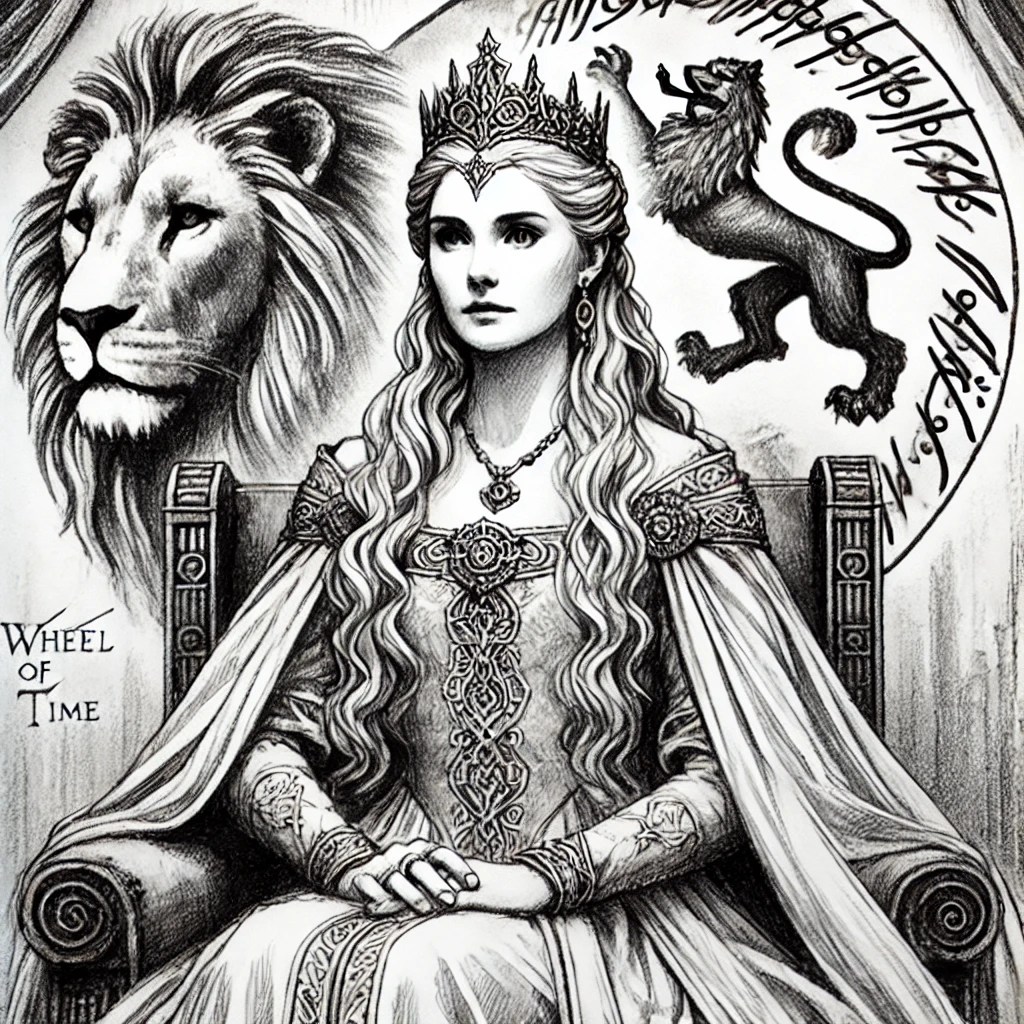
Queen Mordrellen Mantear
The Royal Palace of Caemlyn
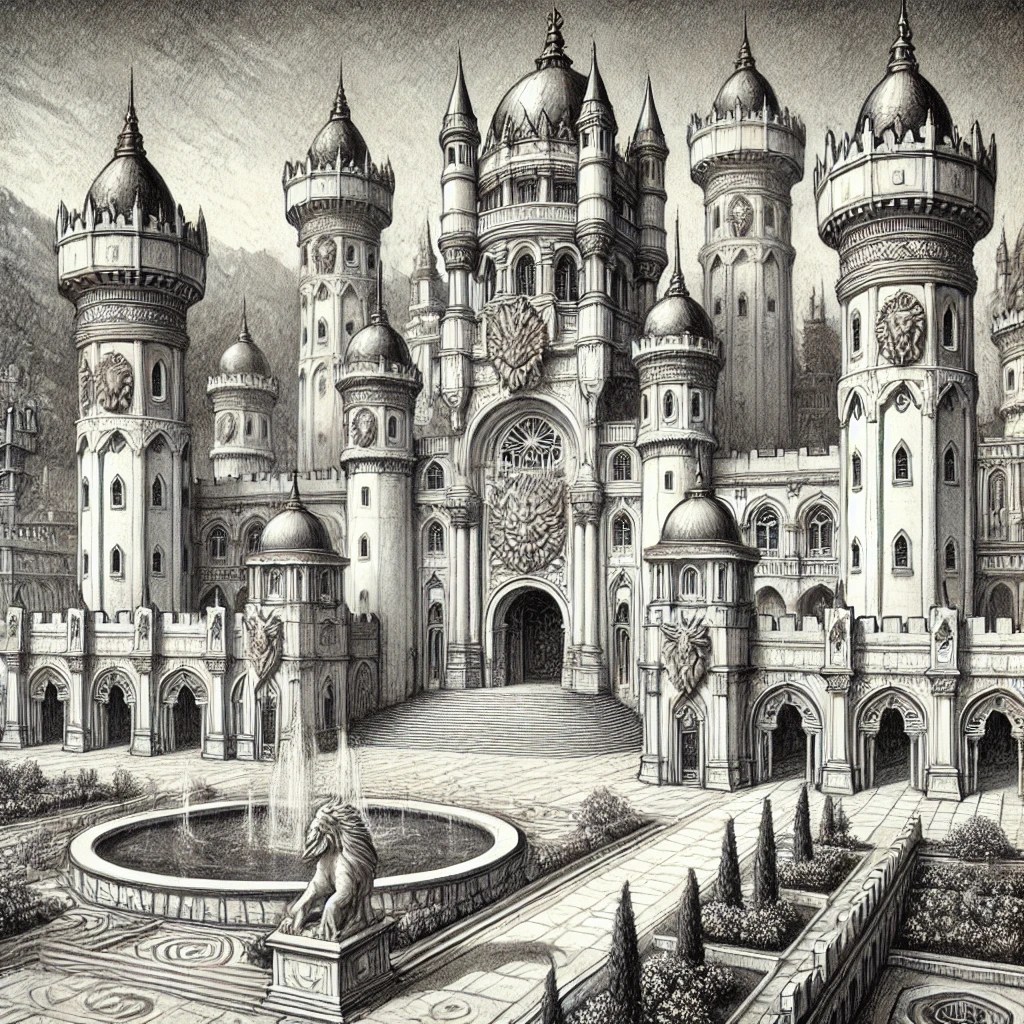
The Royal Palace of Caemlyn is a thing of wonder. I had seen its golden spires from afar, but standing at the gates, I felt like a speck of dust before a mountain. Perched at the center of the Inner City, atop the highest hill, it sat like a crown jewel, glistening and sparkling in the sun. From conversations with locals, I learned that it, like much of the Inner City, had been crafted by Ogier stonemasons in an age long past.
The outer grounds were open to the public that day, a gesture of goodwill from the Queen. Families wandered the lush gardens, marveling at the neatly trimmed hedges and fountains that seemed to sparkle like diamonds in the sun. Children ran laughing between rows of vibrant roses, while elderly couples strolled arm in arm, their faces serene. It was a scene of peace and beauty, and I could scarcely take my eyes off the towering palace beyond.
As I wandered the perimeter walls, a small group of servants caught my eye. Arms laden with trays and supplies, they moved toward a side gate with an air of urgency, their conversation a low murmur. My heart quickened as an idea took root.
I grabbed a tray from a nearby stack, balancing it awkwardly in my hands. Mimicking the hurried steps of the servants, I fell in line behind them, head bowed. My pulse thundered in my ears, but no one seemed to notice. The guards at the side gate gave only a cursory glance before waving us through, their attention more focused on ensuring the palace ran smoothly than on scrutinizing a farm boy playing at being a servant.
Once inside the palace grounds, I carefully slipped away from the bustling group, my curiosity too strong to resist.
Inside the Palace
The halls of the Royal Palace were breathtaking! Far more magnificent than anything I had ever imagined. The walls rose high, lined with massive tapestries that seemed almost alive in the flickering light of chandeliers. Each tapestry told a story: Queen Ishara standing tall and regal as the Lion Banner of Andor was raised for the first time; Andoran knights gleaming in armor, their swords raised against a horde of shadowy Trollocs. The threads shimmered as if woven from starlight itself.
The polished marble floors reflected the opulence of the space, swirling patterns of white and gold guiding the eye to the towering double doors at the end of each corridor. Above, chandeliers glittered like constellations, their crystal drops refracting candlelight into soft, golden hues. The ceiling carvings were a marvel; fierce lions frozen mid-roar, balanced by clusters of delicately etched roses, what would later be the sigil of House Trakand.
Courtiers dressed in silks of every color moved gracefully through the halls, their whispers a constant hum. Servants darted efficiently between rooms, and somewhere in the distance, the faint melody of a harp drifted through the air. The entire palace seemed alive, its beauty woven into every sound, sight, and scent.
Curiosity and Consequence
Drawn deeper into the palace, I passed a gallery that overlooked the gardens below. The sunlight streaming through tall, arched windows painted the walls with rainbows. I lingered, marveling at the view until the sound of footsteps jolted me back to reality.
The banquet hall was a sight to behold. Long tables stretched across the vast space, set with silver goblets that gleamed even in the dim light. Nobles in opulent attire sat in clusters, their laughter light and their gestures elegant. I lingered at the edges, pretending to refill goblets, soaking in the spectacle.
But my exploration did not go unnoticed.
I had just entered a quieter corridor, admiring a gallery filled with marble busts of Andoran queens, when a sharp voice behind me barked, “And what do you think you’re doing here?”
I spun to face a guard whose armor gleamed as brightly as the polished floors. His hand rested on the hilt of his sword, and his eyes narrowed as he studied me. Stammering something about being lost, I tried to edge back toward the corridor, but it was no use.
Within moments, I was hauled unceremoniously down several flights of stairs, my protests ignored.
The Dungeon
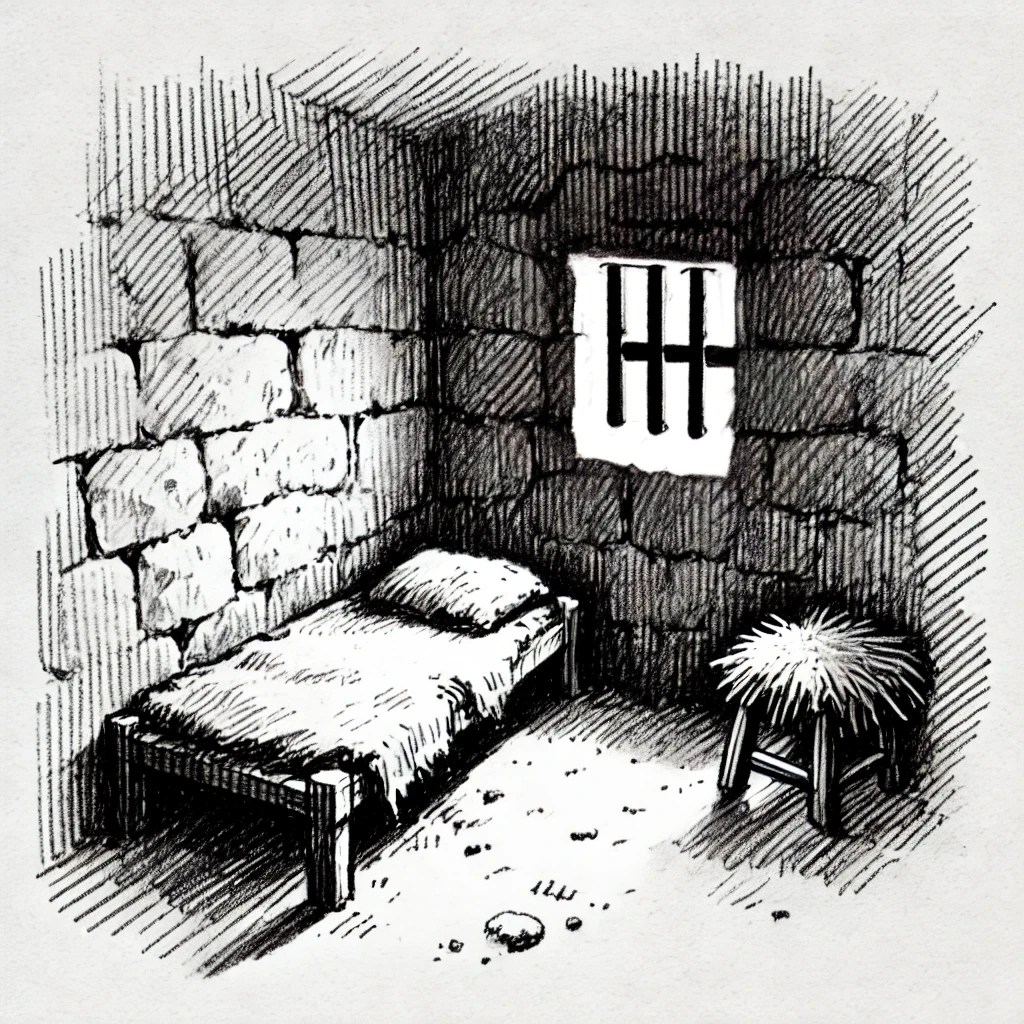
The dungeon was a far cry from the splendor of the palace above. Its walls were damp, and the air was thick with the smell of mildew and despair. I spent three days there, sleeping on a bed of straw that scratched and bit at my skin. My only company was the occasional rat and the distant echoes of guards’ footsteps.
On the morning of the third day, I was brought before a man who introduced himself as Captain Lirithan of the Queen’s Guard. His broad shoulders and piercing gaze left no doubt as to his authority.
“What business does a farm boy have snooping through the Queen’s Palace?” he asked, his tone sharp.
I stammered about wanting to see the tapestries, to learn the stories they told. I admitted to being a traveler, too curious for my own good.
He studied me for a long moment, then shook his head. “You’re either very stupid or very lucky,” he said, his tone softening slightly. “Perhaps both. If you’d wandered into the wrong room, you’d be telling this tale to the worms.”
With that, he ordered my release, though not without a strict warning. The guards escorted me to the gates and promptly tossed me out, quite literally by the ear.
Journal Entry: Lessons in Curiosity
I have learned an important lesson today: some doors are better left unopened.
The Royal Palace is as grand on the inside as it is from the outside; no, more so. But my curiosity has cost me three days in a dungeon and a bruised pride. Still, I can’t help but laugh at the absurdity of it all. I wanted to see the world, and now I’ve seen a dungeon. I suppose my journey could have ended there and then had I not found myself before as forgiving a juge as the Captain turned out to be.
Reflection:
Curiosity is a fine thing, but so is knowing when to temper it. The world is full of wonders, but not all of them are meant to be seen up close. At least not without an invitation.
Footnote: The Royal Palace of Caemlyn
Designed by Ogier craftsmen, the Royal Palace is both a fortress and a symbol of Andor’s might. Its golden spires and intricate stonework are unmatched, and it is said that the halls themselves echo with the whispers of Andor’s history.
The Lioness and the Shadow
My last evening in an Andoran Inn
The common room buzzed with warmth and the smell of stew. An old storyteller, his hair silver and his voice rich, had gathered a small audience near the hearth. I leaned in, my bowl of stew forgotten, as he spun his tale.
“Have you heard the tale of the Lioness and the Shadow?” the man began, his voice weaving through the murmurs. “A tale as old as Andor itself, some say.”
The room quieted, and he continued.
“Long ago, when the Lion Throne still trembled with uncertainty, a queen of Andor ruled; young, fierce, and untested. They say her name was Mordrellen, though in this story, she is simply the Lioness. Her land was strong, her people proud, but the Blight’s shadow stretched far, and whispers of war haunted the edges of her kingdom.
“One fateful night, a strange man arrived in Caemlyn, cloaked in gray and carrying no name. He was pale as the moonlight, his eyes glinting like chips of ice. He went straight to the palace gates and demanded an audience with the Lioness.
“They say he was an emissary of the Shadow, sent to bring her low. But the Lioness was no fool, and she greeted him not with kindness but with steel; her sword gleamed in the firelight as she demanded to know his business.
“‘Your throne will crumble,’ the stranger said, his voice as hollow as a winter wind. ‘The Shadow rises, and you are but a pebble before its tide.’ But the Lioness, with her heart full of fire, laughed in his face. ‘Andor is no pebble,’ she declared. ‘It is the rock upon which the Shadow will break.’”
The storyteller paused, letting the weight of his words settle. The fire crackled, casting flickering shadows on the faces around him.
“The stranger left that night, but his curse lingered. Soon after, unrest stirred among the noble houses. Bandits struck at the borders, and strange lights were seen in the northern skies. But the Lioness did not falter. She rode to the borders herself, uniting the banners of Andor against the Shadow’s schemes. Some say it was her strength that kept Andor from falling, while others whisper she struck a bargain with the stranger, her courage hiding a deeper sacrifice.”
He leaned forward, his voice dropping to a conspiratorial whisper. “The truth, my friends, is lost to time. But when the northern winds howl, some say you can still hear the laughter of the Lioness, defying the Shadow even as it creeps ever closer.”
The audience clapped, and coins jingled into the man’s hat. I remained seated, my mind turning the tale over and over. Was it truth or embellishment? Perhaps a bit of both. Tales like these are woven from fragments of history, the gaps filled with imagination. Yet, as I looked at the flickering firelight, I thought of the strength it must take to stand against the dark, no matter the cost.
Journal Entry: A Chance Encounter in the Market
Written on the morning of my departure from Caemlyn.
The New City of Caemlyn is a bustling maze of color and sound, its market square the heart of the commotion. I spent my last morning wandering between stalls, marveling at the variety of goods on display. There were bolts of silk in every shade imaginable, jars of honey that glistened like amber, and a spice vendor whose wares filled the air with a heady mix of cinnamon and pepper.
I paused at a stall selling maps, the edges of the parchment curling with age. The vendor, a wiry man with spectacles perched on his nose, noticed my interest and began to talk. “This one shows the Spine of the World,” he said, unfurling a large map. “And here; see these marks? These are the passes through the mountains, though few dare to cross them.”
He spoke of lands beyond the mountains, of the Aiel and their mysterious ways, and of Shara, a place so distant it seemed like a dream. “Few who go there return,” he said with a shrug. “But the tales they bring back are worth the risk.”
I bought a small map of Andor, though the thought of the Spine of the World lingered in my mind as I left the market. The road to Aringill awaited, but my curiosity had already begun to pull me toward the east, to lands I could only imagine. Shara.
Reflection:
Caemlyn is a city of contrasts. Its towers and gardens are a testament to order and beauty, yet its streets pulse with the energy of its people. I leave it behind with a sense of awe and a growing desire to see what else the world holds. The road ahead is long, and I cannot wait to walk it.
Sketches:
A diagram of the merchant’s wagon, showing how her goods were packed and secured.
Local Tales:
Rumors from the caravan about strange lights seen in the mountains to the west.
Recipes:
1. Roast Lamb with Andoran Herbs
Description: A hearty dish featuring tender lamb, seasoned with a mix of Andoran-grown herbs and spices. Often served with roasted root vegetables.
Ingredients:
- Lamb shoulder or leg
- Garlic cloves
- Fresh rosemary, thyme, and parsley
- Olive oil or rendered animal fat
- Salt and cracked black pepper
Preparation: The lamb is rubbed with a mixture of minced garlic, chopped herbs, salt, and pepper, then slow-roasted over an open flame or in a clay oven until tender. Root vegetables like carrots and parsnips are roasted alongside the meat, soaking up the juices.
2. Braised Chicken in Wine with Leeks and Mushrooms
Description: A rich and savory dish, popular among the upper class of Caemlyn, featuring chicken simmered in white wine with leeks and mushrooms.
Ingredients:
- Whole chicken, cut into pieces
- Leeks, finely sliced
- Wild mushrooms (button or chanterelle)
- White wine
- Cream or butter
- Bay leaves and thyme
Preparation: The chicken is browned in butter, then simmered with leeks, mushrooms, and a generous splash of white wine. Herbs are added, and the dish is left to braise until the chicken is tender and the sauce is creamy and flavorful. Served with fresh bread to soak up the sauce.
3. River Fish Stew
Description: A simple yet nourishing stew made with fresh water fish caught from the Arinelle River, combined with seasonal vegetables and fragrant herbs.
Ingredients:
- Freshwater fish (trout or pike), cleaned and filleted
- Potatoes, diced
- Carrots, celery, and onions
- Dill and parsley
- Lemon or vinegar for tang
- Fish stock or water
Preparation: The vegetables are sautéed and simmered in fish stock before the fish fillets are added. The stew is lightly seasoned with herbs, salt, and pepper, finished with a splash of lemon or vinegar. Often served with flatbread or hard rolls.
4. Andoran Honey Glazed Vegetables
Description: A side dish of seasonal vegetables roasted and drizzled with local honey and a sprinkle of cracked pepper.
Ingredients:
- Carrots, turnips, and parsnips
- Andoran honey
- Butter or olive oil
- Salt and black pepper
Preparation: Vegetables are tossed in butter, honey, and seasoning before being roasted until caramelized and golden. Served warm as a complement to any main course.
5. Spiced Apple Tarts
Description: A dessert favored by both nobles and commoners, featuring spiced apples wrapped in flaky pastry.
Ingredients:
Pastry dough or phyllo
Preparation: Spiced apples are mixed with sugar and baked in small pastry shells until the crust is golden and the filling is bubbly. Often served with a dollop of cream or a sprinkle of powdered sugar.
Apples, peeled and diced
Cinnamon, nutmeg, and cloves
Brown sugar
Chapter Two: The Sun Palace and the Game of Houses
(My Age : 16)
Journal Entry: Arrival in Cairhien
Written on my second evening in the city.
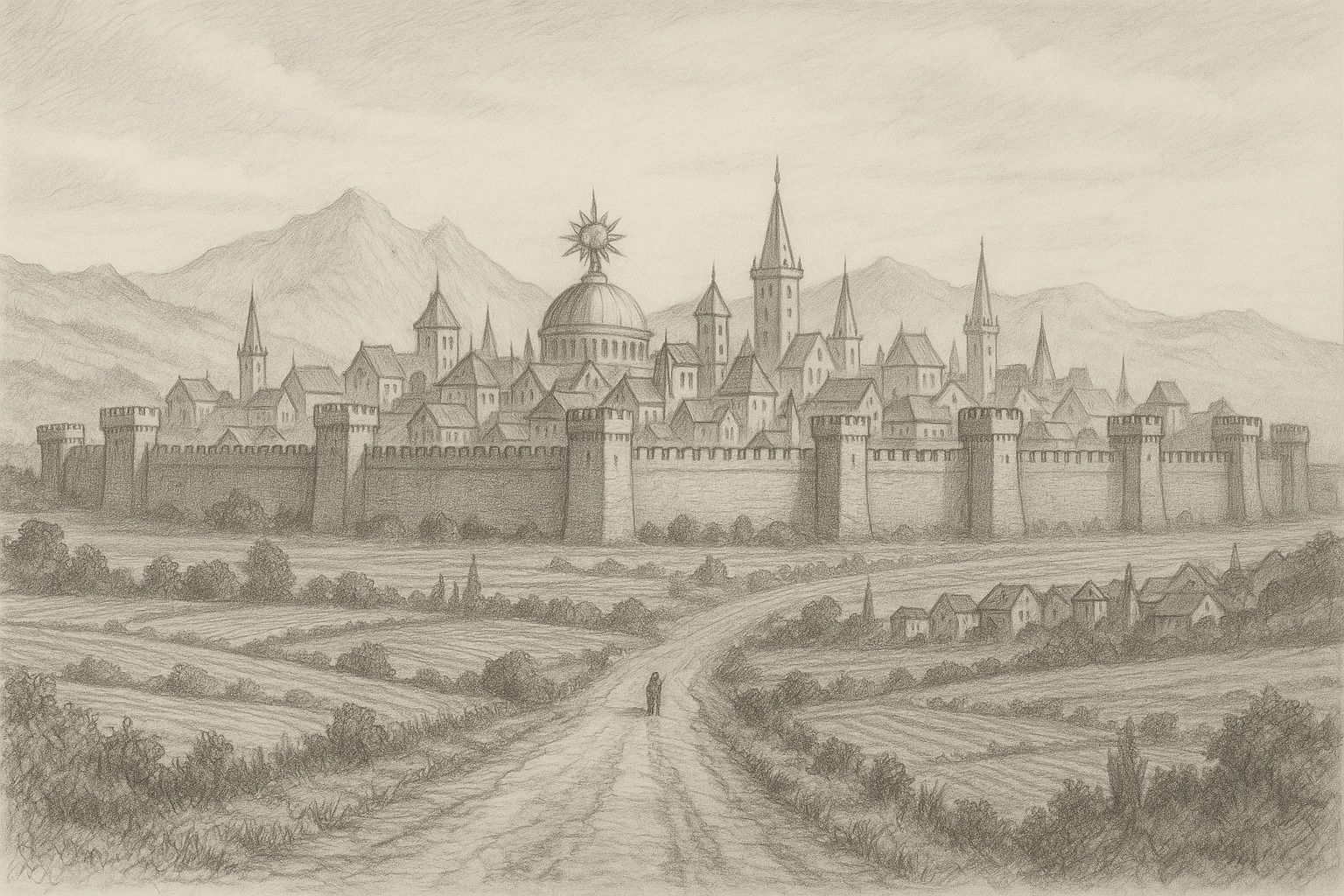
My 16th name day came and passed without any fanfare, just a day like any other. After several weeks more of travelling, Cairhien finally rose before me as I crested a low hill, its pale walls shimmering in the afternoon sun. From a distance, it looked like a chessboard laid out with perfect precision, the streets within a grid of straight lines and sharp angles. Even the banners of the noble houses; blue, gold, and crimson; seemed to hang at exactly the same height.
When I reached the gates, the guards inspected my papers and waved me through without a word. Inside, the city was alive with people, yet it felt quiet. Conversations were muted, and footsteps echoed in a way that seemed almost eerie. I had never seen such order, such restraint. Even the beggars seemed to sit straighter than usual, their hands outstretched with practiced dignity.
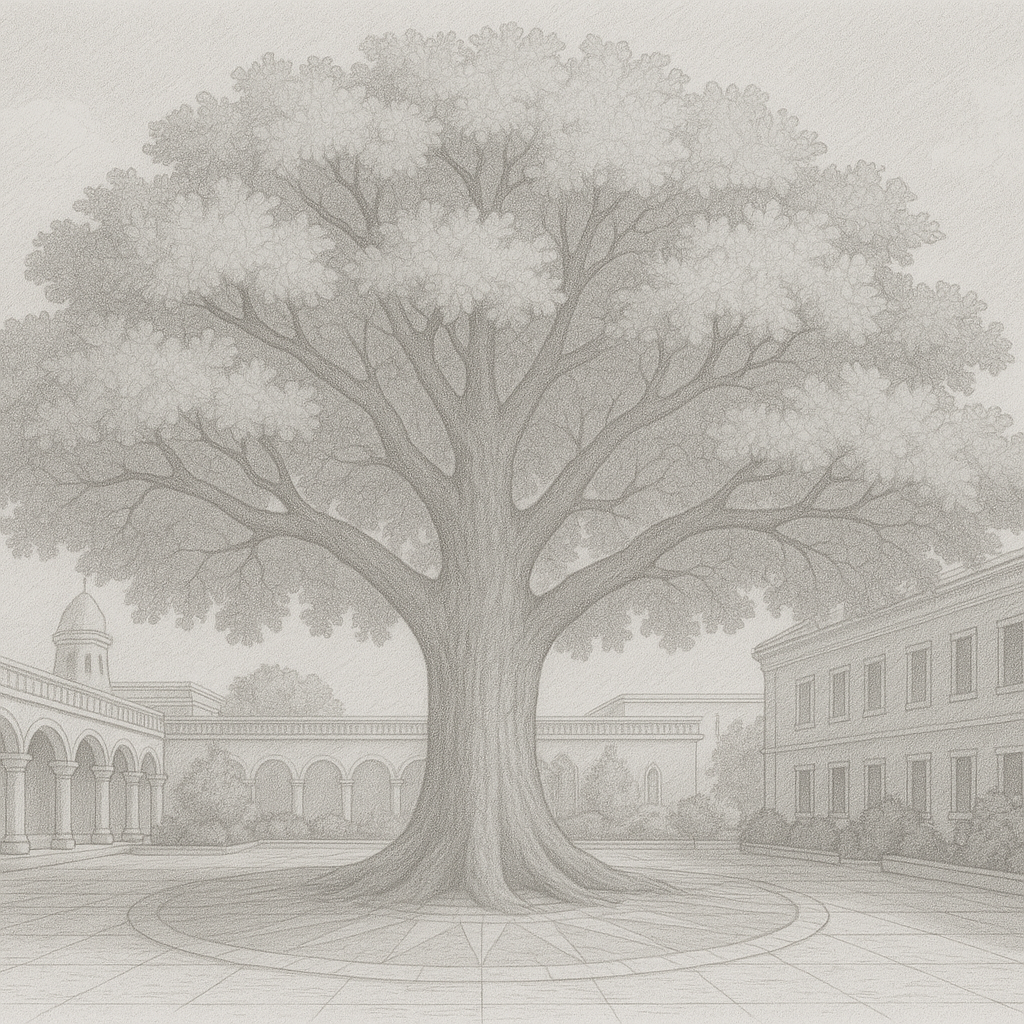
I wandered toward the center of the city, drawn by the gleam of the Sun Palace’s spires. Its gardens spread like an emerald carpet around its base, with golden-leaved Avendoraldera at their heart. I asked a gardener trimming the hedges about the tree. He told me it was a gift from the Aiel, a symbol of peace between their people and the Cairhienin. “And a rare thing, peace,” he added with a wry smile.
Footnote: Avendoraldera
Grown from a sapling of Avendesora, the Tree of Life, gifted to Cairhien by the Aiel as a gesture of peace. Its golden leaves shimmer in the sunlight, and it is said to grow only in soil blessed by the One Power. The Aiel treat it with reverence; the Cairhienin, it seems, treat it as a symbol of status.
Journal Entry: The Game of Houses
Written after a day spent in the market.
The merchants here do not merely sell their wares; they stage performances. Every word, every gesture feels rehearsed, calculated. I watched two merchants argue over stall space, only to realize they were pawns in some larger game. “House Damodred owns half this square,” one hissed, his face red. The other sneered. “Then House Riatin will own all of it soon enough.”
That evening, I sat in a dimly lit inn near the palace and overheard a group of nobles laughing about the same merchants. One raised a glass to their cleverness, while another smirked. “We’ll see how clever they are when Riatin cuts their line of credit.”
The innkeeper, a sharp-eyed man who seemed to notice everything, leaned close as he served me my supper. “Careful what you say here, lad,” he murmured. “Even silence can be a move in the Game of Houses.”
Reflection:
Cairhien is a place of beauty and ambition, but its perfection feels sharp-edged, like a knife hidden beneath silk. I leave tomorrow, eager to see what lies beyond its walls; but I will not forget what I have learned here.

 The HolloWords of the Mad
Leave a comment